Culture
- October 05, 2017
Twentieth and Julian Mayor
- October 05, 2017
Diversifying Design: A Q&A with Ambra Medda

Diversifying Design: A Q&A with Ambra Medda
Prior to joining Christie’s in London as global creative director for its recently expanded 20/21 Design department, Ambra Medda made her mark as co-founder of Design Miami and creator of the online collectible design platform L’ArcoBaleno. Anna Kats talked with her about the plans to increase the audience for the design category at Christie’s and the lessons she has learned from past ventures.
What are the biggest changes in the design market in recent years?
There’s a lot more interest now than when I launched Design Miami a decade ago. At that time, exhibitors tended to bring as much merchandise as possible and hope for the best. Now, dealers are more likely to present a curated exhibition that tells a story or highlights the work of one designer. Design has been elevated and presented in a way that does it justice.When you created L’ArcoBaleno, was there a niche in the market you were seeking to fill?
Like it or not, digital is a big part of the way people are consuming culture and exercising buying power. While there was a lot of information out there about design broadly, I saw there really wasn’t anything in the digital sphere that justified and explained why pieces are important — be it because of the way they’re made, the legacy that they represent, or because of their provenance.The Internet offers an opportunity to inform people and present some of the most exciting material to an international audience that may not have access to galleries and fairs.
Do you see the emergence of more cultural diversity in the design realm?
Clearly there’s a lot more design coming from all over the world, and that’s incredibly exciting, especially since we’ve had a European orientation and aesthetic for so long. I saw wonderful shows of Japanese design at the Japanese embassy this past year; I’ve seen phenomenal Korean crafts being presented at Maison et Objet as well as at the London Design Festival. At the Royal College of Art, which has a very strong design program, a notably high percentage of the students are Asian. Whether you go to Maison et Objet or the Musée des Arts Décoratifs, or even to the Salone del Mobile, which is happening this month in Milan, you will see pieces by a number of emerging Asian designers.Is there a balance that you will seek in the variety of historic decorative arts and contemporary design that Christie’s will be offering?
The beauty of design is that it’s such an elastic field. Because it includes so many things, we are at liberty to mix things and create unexpected combinations of merchandise that may make you look at things very differently. So I think that’s my quest: to introduce people to something new through interesting juxtapositions.What do you see as a good investment at the moment?
Since the great recession, traditional pieces have done the best. I think people have felt more confident spending money on things that have a steady track record or are big names. I think now we’re sort of moving out of that safety phase. People are starting to open their eyes and be potentially more open to buying some things that are less secure.I also see a lot of opportunity in Italian design. People such as Ettore Sottsass, I feel, are kind of undervalued. You can buy a beautiful piece from the 1980s that is a complete masterpiece, utterly unique, and it actually costs less than an emerging talent.
A successful piece of design, for me, is both functional and beautiful. You can love your tea strainer, because when it’s well designed and functional, there’s something really encouraging and refreshing and comforting in knowing that. As always, I’m a tremendous advocate of following your gut and being honest to your own instinct. At the end of the day it’s design—hopefully you’re using it, you’re living with it, and it’s enriching your everyday life.
- October 05, 2017
Autoban Interviewed by Designboom
- October 05, 2017
Bec Brittain Interviewed by Dezeen
- October 05, 2017
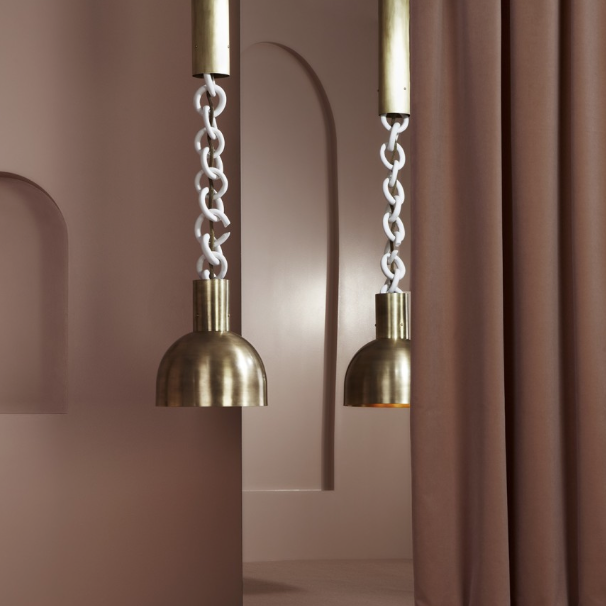
Link Porcelain Pendants by Apparatus
Created in collaboration with the ceramicist Alice Goldsmith, the Link Porcelain pendant examines both the strength and vulnerability of the artist’s porcelain chain Link Porcelain Pendants by Apparatus.
Fractured links suspend oversized brass shades, their fragility anchored and protected by the oppositional metal. Link Porcelain Quad-pendant Link Porcelain Mono-pendant Link Porcelain Tri-pendants - October 05, 2017
Dezeen spotlights NY lighting designers
- October 05, 2017
Plateau Table by Julian Mayor
Julian Mayor's final 3D Rendering of the Plateau Table, edition 1 of 8.
- October 05, 2017
Estudio Campana, Brazilian Baroque
Fernando and Humberto Campana delight in the aesthetics of Roman Classicism, translating the techniques and details used during this period into a contemporary collection of furniture for London’s David Gill gallery. ‘Brazilian Baroque’ — a continued exploration of the brother’s series which first began in 2010 — sees the São Paulo duo employing luxurious materials such as marble and gilded bronze. the family of sculptural, but functional pieces express a certain imperfection, a kind of seduction, that relates back to the element of recycling that is signature of Estudio Campana’s work; thus, referring not only to the mediums used, but also the processes which they have revived and reconfigured, while working alongside Roman artisans. the realization of ‘Brazilian Barqoue’ sees the Campana’s articulating the traditional skills learned into their own style and artistic language.
'We have managed to put the classical and the modern into a situation of communication,’ says Fernando Campana.
'The modernity of our work also lies in demonstrating that with the scraps of the past you can construct not only the present but also the future. I believe the freshness of our work lies here, in constructing a new vision,’ adds Humberto campana.
‘Brazilian Barque’ is on display at David Gill gallery, shown in collaboration with Galleria O.
Fernando & Humberto Campana
Lina Armchair, 2014
Gilded bronze and mohair wool velvet
H 85 / L 80 / W 78 cm
edition 12 + 2 A.P.
- October 05, 2017
Plateau Table
Julian Mayor's final 3D Rendering of the Plateau Table, edition 1 of 8.
- October 05, 2017
Luxe Interview with Tom Dixon
Self-taught British designer Tom Dixon believes that rules are made to be broken. Dixon began his creative life as a professional musician, playing bass in a disco band in the 80s. Then, he learned oxy-acetylene welding in a car body repair shop in South London and—after a series of mutations originating from a doodle of a chicken—designed the iconic “S Chair,” introduced by Cappellini in 1989. “If there are rules to design, I don’t know what they are,” he says, “I just have ideas and I want to see what happens if I put them out there.”
This has clearly worked in Dixon’s favor. Since launching design brand Tom Dixon in 2002, its presence has grown to over 60 countries. With designs inspired by Britain’s heritage, his collection of contemporary pendants, floor and table lights, including the bestselling Copper Shade and Mirror Ball, have become iconic fixtures in homes all over the world.
LX: What’s next for you?
TD: We've spent the last ten years expanding wherever we could, toward whomever approached us. We are in 65 countries now, so this year is going to be focused on the places that like our products the most. We’ve laid the infrastructure in the United States and I think you get out of the U.S. what you put in. It's just like in rock and roll: If you don’t play the radio stations, if you don’t play the small towns, you’re never going to succeed.
There’s such a vibrant design community in the United States that's interested in what's going on globally. What’s interesting about the modern world [is that] you don’t need to attract large amounts of people globally to be a successful designer. You can be quite focused and do specific work and people will come to you if they’re attracted to it.


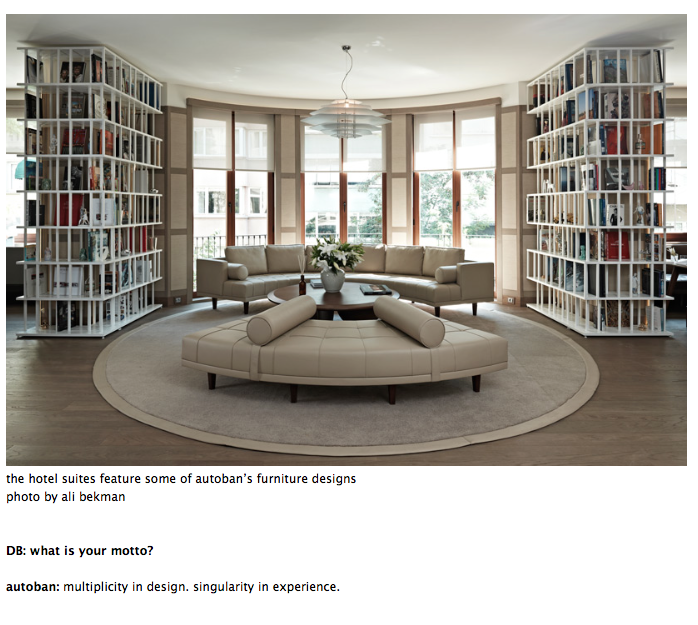
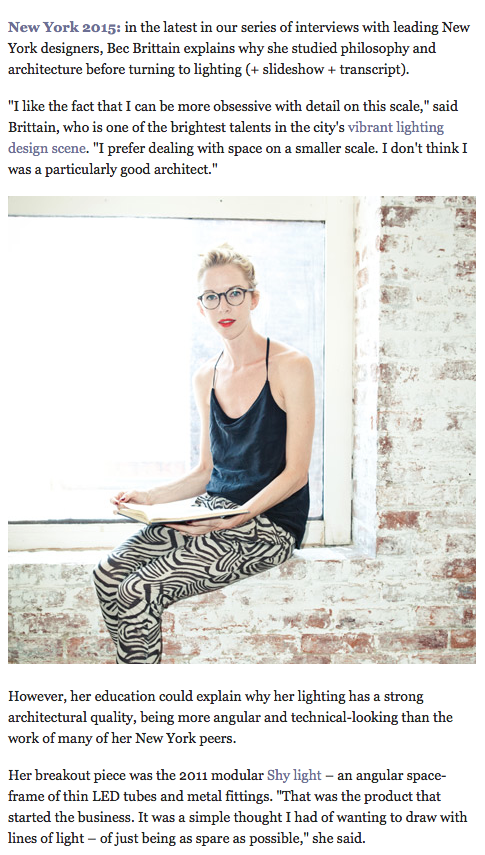



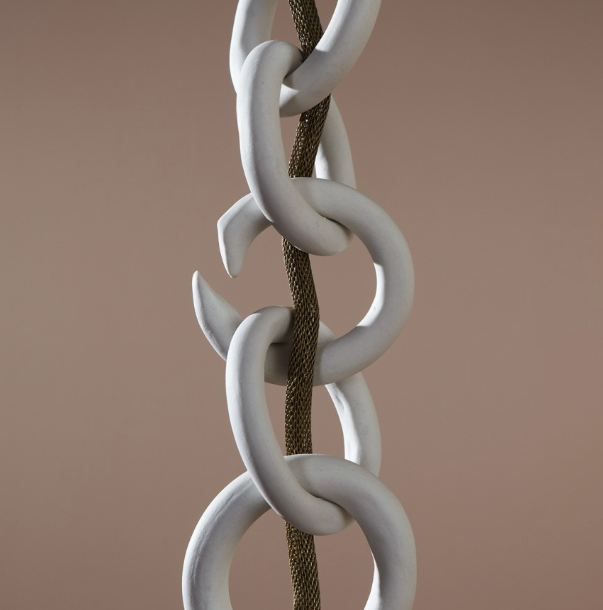 Fractured links suspend oversized brass shades, their fragility anchored and protected by the oppositional metal.
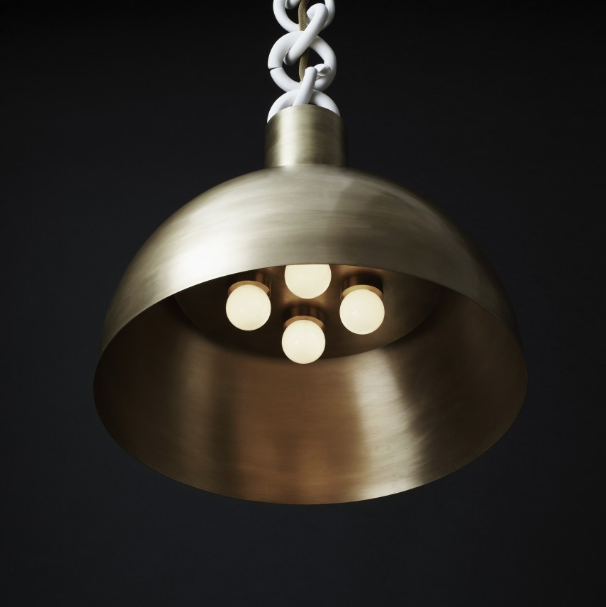 Link Porcelain Quad-pendant
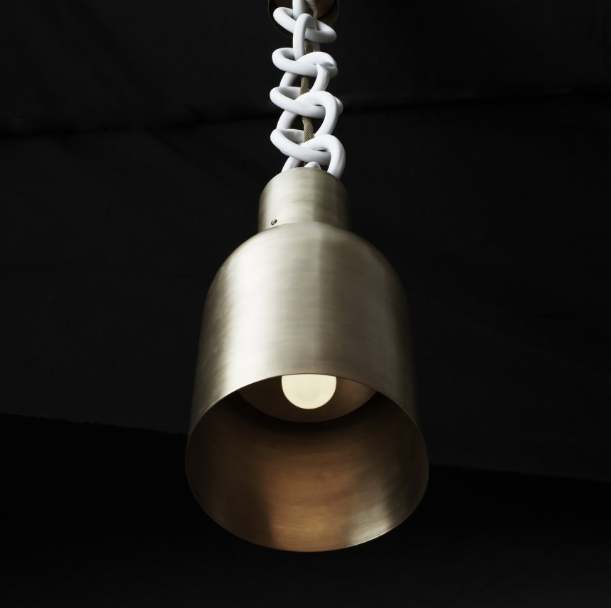 Link Porcelain Mono-pendant
 Link Porcelain Tri-pendants